Making Tax Digital Explained for UK Businesses: Key Dates & Rules
Understanding Making Tax Digital (MTD)—and when it applies to you—has become increasingly important for UK taxpayers. It’s one of the biggest changes to the tax system in recent years, and one thing is especially important to know from the start: there isn’t a single start date for everyone.
MTD applies at different times depending on your business type and income level. Knowing where you stand early can save you stress later and help you stay compliant without risking penalties.
In this guide, we’ll walk you through what Making Tax Digital is, who it affects, and when you need to be ready.
What Is Making Tax Digital?
Making Tax Digital is HMRC’s initiative to modernise the UK tax system by moving more record-keeping and reporting online. Under MTD, tax information can no longer be typed manually into HMRC’s systems. Instead, your records must be kept digitally and submitted directly to HMRC using compatible software.
The goal is simple: improve accuracy, reduce common errors, and give both taxpayers and HMRC a clearer, more up-to-date picture of tax affairs throughout the year—rather than everything being dealt with at the last minute.
When Does Making Tax Digital Start?
MTD is being rolled out in stages, with different start dates depending on the tax involved and the type of taxpayer. It’s already in place for VAT and is now being phased in for Income Tax Self Assessment (ITSA) for sole traders and landlords.
Making Tax Digital for VAT (Already in Place)
If you’re VAT registered, MTD for VAT is already the standard. HMRC requires VAT-registered businesses to keep digital VAT records and submit VAT Returns using compatible software.
For many businesses, this is already part of their routine bookkeeping process.
Making Tax Digital for Income Tax (Phased Rollout)
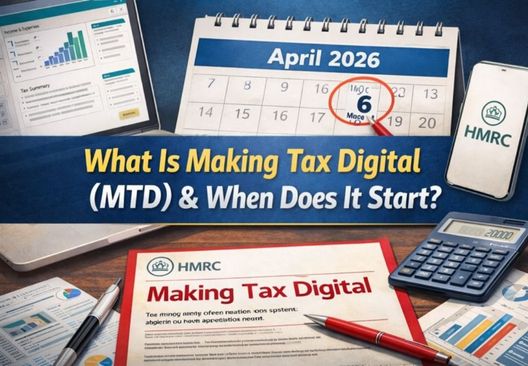
MTD for Income Tax applies to sole traders and landlords who currently submit tax returns through Self Assessment. HMRC has confirmed that this will become mandatory in stages, starting from 6 April 2026.
The currently confirmed thresholds and dates are:
-
From 6 April 2026: If your qualifying income from self-employment and/or property is over £50,000
-
From April 2027: Extended to those with qualifying income over £30,000
-
From April 2028: Extended to those with qualifying income over £20,000
Even if you haven’t received a letter from HMRC, it’s still your responsibility to check whether MTD applies to you. HMRC provides an online tool that allows you to confirm if—and when—you’ll need to comply with MTD for Income Tax.
What Changes Day-to-Day Under MTD?
Once you’re within the scope of MTD for Income Tax, you (or your accountant) will need to use compatible software to:
-
Keep digital records of income and expenses
-
Send quarterly updates to HMRC
-
Submit your end-of-year submission and finalise your tax position as usual
It’s worth clearing up a common concern here: quarterly updates do not mean paying tax quarterly. These updates are simply regular reporting checkpoints to keep your records accurate and up to date. Your software will guide you through the reporting periods and deadlines.
What Should You Do Now?
Taking a few practical steps now can make the transition much smoother later.
1. Work Out What Applies to You
If you’re VAT registered, you’re likely already using MTD for VAT. If you’re a sole trader or landlord, now is the time to check your qualifying income and confirm your MTD start date.
2. Choose the Right Software
HMRC provides guidance on compatible MTD software and an online tool to help you find the right option. This could be a full accounting package, or “bridging” software that links your existing spreadsheets to HMRC—useful if you’re not quite ready to move away from spreadsheets altogether.
3. Get Support Early
If you work with an accountant, they can help you choose suitable software, set up your processes, and manage submissions on your behalf. Getting support early often makes the transition far less stressful.
Final Thoughts
Making Tax Digital is ultimately about creating better record-keeping habits and reducing avoidable mistakes. That said, the move can feel daunting—especially if your bookkeeping is currently manual or spreadsheet-based.
The good news is that you don’t have to handle it on your own.
At TVR Accountants, we offer specialist VAT and Self Assessment tax services. Our experienced team can support you with every aspect of your MTD obligations, from setting up the right software to submitting quarterly updates and completing your end-of-year returns.
If you’d like to discuss how Making Tax Digital affects you, feel free to get in touch with our team.
Email: info@taxvatreturn.co.uk
Call: 01284 332375
Recent Article