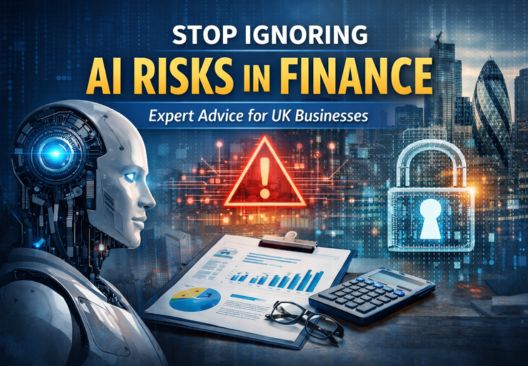
Stop Ignoring AI Risks in Finance | Tax VAT Return UK
It’s no secret that Artificial Intelligence (AI) is moving fast. For UK businesses, it feels like every week there’s a new tool promising to automate your bookkeeping or predict your cash flow with the click of a button.
At Tax VAT Return, we’ve seen the incredible efficiency these tools bring. But we’ve also seen the "hidden" side of the coin. AI isn’t a "set it and forget it" solution—and treating it like one can lead to some expensive headaches.
If you’re integrating AI into your financial processes, here is what you need to keep on your radar to keep your business safe.
What We Actually Mean by "AI in Finance"
When we talk about AI in your day-to-day operations, we’re usually looking at:
- Smart Bookkeeping: Software that categorizes transactions automatically.
- Predictive Forecasting: Tools that guess your future revenue based on past trends.
- Fraud Detection: Systems that flag unusual spending.
- Credit Analysis: Algorithms that decide if a client is "good" for a loan or credit line.
These tools are powerful, but they are not infallible. Here is where things often go wrong.
5 Hidden Risks You Can’t Afford to Ignore
1. The "Garbage In, Garbage Out" Problem:
AI is only as smart as the data you give it. If your initial data entry is messy or incomplete, the AI will confidently provide you with incorrect forecasts or, worse, inaccurate tax filings.
2. Unintentional Bias:
Algorithms learn from historical patterns. If that history contains old biases—especially in areas like credit scoring—the AI might unfairly disadvantage certain groups. In the UK, this isn't just a moral issue; it’s a regulatory one.
3. New Cybersecurity Targets:
Sensitive financial data is a magnet for hackers. AI systems create new "doors" into your business's data. If those doors aren't properly bolted, a breach could lead to devastating financial and reputational loss.
4. The Compliance Trap:
The UK has some of the strictest financial and data rules in the world, from GDPR to FCA guidelines. AI doesn’t automatically follow these rules for you. Relying on a bot to handle your compliance without a human check is a high-stakes gamble.
5. Losing the "Human Touch":
AI can spot a trend, but it doesn't understand the context of your business. It doesn't know you’re planning a major pivot or that a one-off expense won't happen again next year. Blindly following an AI’s advice can lead to decisions that look good on paper but fail in reality.
How to Use AI Without the Stress
You don't have to avoid AI—you just have to manage it. Here’s our checklist for staying safe:
| Step | Action Item |
| Audit Frequently | Don't trust the first draft. Cross-check AI reports against your actual bank statements. |
| Keep Humans in the Loop | Use AI for the heavy lifting, but let a qualified accountant make the final call on big decisions. |
| Train Your Team | Ensure your staff knows what the software can’t do as much as what it can. |
| Stay Compliant | Verify that your AI tools meet current UK tax and data privacy standards. |
Why a UK Accountant is Your Best AI Partner
At Tax VAT Return, we don’t see AI as a replacement for what we do—we see it as a tool that we need to supervise. We help businesses bridge the gap between high-tech software and real-world financial security.
Whether it's auditing your automated systems or ensuring your data handling meets UK regulations, we’re here to make sure technology works for you, not against you.
Is your AI software giving you numbers you can actually trust? Would you like me to help you draft a specific "AI Safety Checklist" tailored to your current bookkeeping process?
Email: info@taxvatreturn.co.uk
Call: 01284 332375
Recent Article