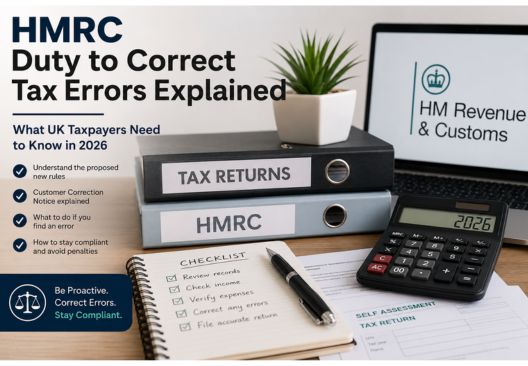
HMRC Duty to Correct Tax Errors Explained
Mistakes on a tax return are more common than many people realise. A missing invoice, an incorrect expense claim, a forgotten source of income, or a simple typing error can all lead to inaccurate tax reporting. In many cases, these mistakes are genuine and unintentional, but under the UK's tax system, taxpayers are expected to take reasonable care when submitting information to HMRC.
Recently, HMRC announced proposals to modernise how tax errors are corrected. The consultation introduces the concept of a broader duty to correct tax errors and a new Customer Correction Notice, which could require taxpayers to review and correct inaccuracies when HMRC believes an error may exist. While these proposals are not yet law, they signal HMRC's intention to strengthen compliance and encourage taxpayers to correct mistakes promptly.
For individuals, sole traders, landlords, contractors, freelancers, and business owners, understanding these proposed changes is important. If implemented, they could affect how tax errors are identified, corrected, and potentially penalised in the future.
What Is HMRC's Duty to Correct Tax Errors?
The phrase "duty to correct tax errors" refers to the responsibility of taxpayers to correct inaccuracies in their tax affairs once they become aware of them.
At present, UK taxpayers are already expected to provide accurate information and notify HMRC when they discover certain mistakes. However, HMRC believes the current correction process is spread across different tax regimes and can be confusing for taxpayers.
To simplify the system, HMRC has launched a consultation proposing a more consistent legal framework that would apply across multiple taxes. Rather than having separate correction rules for different tax types, HMRC wants a clearer and more unified obligation for taxpayers to correct known errors.
The proposal isn't designed to punish people for making genuine mistakes. Instead, its purpose is to encourage earlier corrections, improve tax compliance, and reduce situations where incorrect tax positions remain unresolved for long periods.
For taxpayers, the key message is simple: if you become aware of a tax error, ignoring it may become increasingly difficult under the proposed rules.
Why Is HMRC Proposing These Changes?
HMRC estimates that mistakes and inaccuracies contribute significantly to the UK's tax gap each year. While some errors result from deliberate tax evasion, many are caused by misunderstandings, poor bookkeeping, missing records, or incorrect tax calculations.
The consultation aims to create a system that:
-
encourages taxpayers to correct genuine mistakes voluntarily
-
provides a consistent correction process across different taxes
-
helps HMRC resolve tax errors more efficiently
-
reduces uncertainty about taxpayer responsibilities
-
improves fairness for compliant taxpayers
Rather than relying solely on investigations after problems are discovered, HMRC wants taxpayers to play a more active role in reviewing and correcting their own tax affairs.
For businesses that already maintain accurate financial records, these proposals may have little day-to-day impact. However, for taxpayers who leave bookkeeping until the last minute or rarely review previous tax returns, the proposals highlight the importance of maintaining accurate records throughout the year.
What Is a Customer Correction Notice?
One of the most discussed proposals is the introduction of a Customer Correction Notice (CCN).
Under the consultation, HMRC could issue a Customer Correction Notice where it believes a taxpayer may have made an error in a return or tax document.
The notice wouldn't automatically mean HMRC has concluded that tax has been underpaid. Instead, it would require the taxpayer to review the relevant information and either:
-
confirm that the return is correct, or
-
correct any inaccuracies within the specified timeframe.
This proposal is intended to create a more structured process for resolving suspected errors before they develop into larger compliance issues.
It's important to understand that this is currently part of HMRC's consultation and has not yet been introduced into law. The final rules may change after feedback from taxpayers, businesses, accountants, and professional bodies.
Does This Mean HMRC Think Every Mistake Is Tax Fraud?
Absolutely not.
One of the biggest misconceptions surrounding the consultation is that HMRC intends to treat every tax error as deliberate fraud.
That isn't what the proposals suggest.
HMRC recognises that genuine mistakes happen. Tax legislation is complex, especially for self-employed individuals, landlords, and small business owners who manage their own accounts.
The important distinction is between:
-
accidental mistakes made despite taking reasonable care,
-
careless errors that could have been avoided through better record-keeping or attention, and
-
deliberate attempts to mislead HMRC.
The way HMRC responds often depends on the circumstances surrounding the error, including how it occurred, whether reasonable care was taken, and whether the taxpayer acted promptly once the mistake was discovered.
Correcting an honest mistake voluntarily is generally viewed much more positively than ignoring it after becoming aware of the issue.
Who Could Be Affected by These Proposed Rules?
If introduced, the proposals could potentially affect a wide range of UK taxpayers, including:
-
Sole traders
-
Company directors
-
Partnerships
-
Individuals who file Self Assessment tax returns
In practice, anyone responsible for reporting income or paying tax could have responsibilities under the proposed framework.
This doesn't necessarily mean every taxpayer will receive a Customer Correction Notice. However, it does reinforce the importance of regularly reviewing tax returns and financial records to ensure they remain accurate.
For growing businesses, maintaining organised bookkeeping and reviewing returns before submission can significantly reduce the likelihood of unexpected issues arising later.
What Should You Do If You Discover a Tax Error?
Finding a mistake on a previously submitted tax return can be worrying, but ignoring it is rarely the best solution.
The first step is understanding exactly what the error involves. Sometimes it's a simple administrative mistake with little impact on the tax due. In other cases, the correction may affect the amount of tax payable or refundable.
Before contacting HMRC, it's sensible to gather all relevant records, including invoices, receipts, bank statements, payroll information, or other supporting documents that explain the situation.
If you're unsure whether an amendment is required or how the correction should be made, professional advice can help you avoid making further mistakes.
Acting promptly demonstrates that you're taking your tax obligations seriously and often makes resolving the issue far simpler than waiting until HMRC raises questions.
For many taxpayers, seeking guidance early provides reassurance and helps ensure any correction is made accurately and in accordance with HMRC requirements.
Why Accurate Record-Keeping Matters More Than Ever
Regardless of whether these proposals become law in their current form, one message is already clear: good record-keeping remains one of the most effective ways to avoid tax problems.
Keeping invoices, receipts, bank statements, expense records, and accounting documents organised throughout the year makes it much easier to prepare accurate tax returns and respond confidently if HMRC requests further information.
Many tax errors aren't caused by complicated legislation—they happen because important records are missing, income is overlooked, or expenses cannot be supported with appropriate evidence.
Businesses that review their financial records regularly are generally in a much stronger position to identify and correct issues before they become compliance concerns.
For that reason, accurate bookkeeping isn't simply an administrative task; it's an important part of reducing tax risk and staying compliant with HMRC expectations.
How Can You Correct a Tax Error?
If you discover that you've made a mistake on a tax return, don't panic—but don't ignore it either.
The right course of action depends on the type of tax involved, when the error was made, and whether the return can still be amended under HMRC's rules. Some mistakes can be corrected by amending a previously submitted return, while others may require you to notify HMRC separately.
The most important step is to act as soon as you become aware of the error. Delaying the correction may increase the risk of interest, penalties, or further enquiries if HMRC later identifies the mistake independently.
Before making any correction, review all supporting documents carefully. Bank statements, invoices, receipts, payroll records, and accounting software can help confirm whether the original return was inaccurate and ensure that any amendment is based on complete and accurate information.
If the error is significant or you're unsure how to correct it, professional advice can help ensure the amendment is completed correctly and that all relevant information is disclosed to HMRC.
What Happens If You Ignore a Tax Error?
One of the key reasons behind HMRC's proposed Duty to Correct Tax Errors is to encourage taxpayers to deal with mistakes promptly instead of leaving them unresolved.
Ignoring a known error can create bigger problems over time. If HMRC later identifies an inaccuracy that should have been corrected, the taxpayer may face additional scrutiny, and depending on the circumstances, interest and penalties could apply under existing tax rules.
The proposed framework also suggests that taxpayers who receive a Customer Correction Notice may be required to review their tax position and respond within a specified period. Failing to respond appropriately could lead to further compliance action if these proposals become law.
Even outside the proposed changes, responding quickly when you discover a mistake is generally the best approach. It demonstrates that you're acting in good faith and taking reasonable care to keep your tax affairs accurate.
How Can You Reduce the Risk of Tax Errors?
Most tax mistakes are preventable.
Whether you're self-employed, a landlord, a company director, or running a growing business, developing good financial habits throughout the year can significantly reduce the likelihood of errors appearing on your tax return.
Some practical steps include:
-
Keeping bookkeeping records up to date.
-
Storing invoices and receipts securely.
-
Reviewing income from all sources before filing.
-
Checking expense claims carefully.
-
Reconciling bank accounts regularly.
-
Reviewing your tax return before submission.
-
Seeking professional advice if you're unsure about HMRC rules.
Many businesses only review their finances when a filing deadline approaches. Unfortunately, this often increases the risk of overlooked income, duplicated expenses, or missing documentation.
Maintaining organised financial records throughout the year not only makes tax returns easier to prepare but also provides greater confidence if HMRC ever asks questions about your accounts.
Why Professional Tax Advice Can Make a Difference
Tax legislation changes regularly, and keeping up with new consultations, compliance requirements, and reporting obligations can be challenging—especially for business owners who are already managing day-to-day operations.
An experienced tax adviser does much more than prepare tax returns.
Professional support can help you identify reporting errors before submission, review historical returns where necessary, explain HMRC correspondence, advise on voluntary disclosures, and ensure corrections are made using the appropriate procedures.
If HMRC introduces the proposed Duty to Correct Tax Errors, many taxpayers may also benefit from professional guidance when responding to a Customer Correction Notice or reviewing previously submitted returns.
At TaxVATReturn, we work with sole traders, freelancers, landlords, contractors, company directors, and limited companies across the UK, helping them submit accurate tax returns while staying compliant with HMRC requirements.
Whether you need assistance with Self Assessment, VAT Returns, Payroll, CIS Returns, or ongoing Bookkeeping, our goal is to simplify the process and help you avoid costly mistakes before they become larger problems.
What Should Businesses Do Now?
Although HMRC's Duty to Correct Tax Errors is currently a proposal rather than a legal requirement, businesses don't need to wait for new legislation before reviewing their tax processes.
This is a good opportunity to assess whether your bookkeeping is up to date, whether previous tax returns accurately reflect your financial records, and whether your internal processes are strong enough to identify errors before returns are submitted.
If you discover a genuine mistake, dealing with it early is usually far easier than waiting until HMRC identifies the issue.
For businesses with multiple income streams, VAT obligations, payroll responsibilities, or CIS reporting requirements, regular reviews can help reduce compliance risks and improve overall financial management.
Rather than viewing tax compliance as a once-a-year task, treating it as an ongoing process helps create more accurate records and reduces unnecessary stress when filing deadlines approach.
Need Help Reviewing or Correcting a Tax Return?
Whether you've identified a genuine mistake, want to review a previously submitted return, or need expert support with Self Assessment, VAT, Payroll, or Bookkeeping, the team at TaxVATReturn is here to help. Contact us today for practical, professional advice tailored to your circumstances.
Recent Article