UK VAT Registration Threshold 2026 & 2027 Explained
Your business does not need to make £90,000 in profit before VAT becomes an issue.
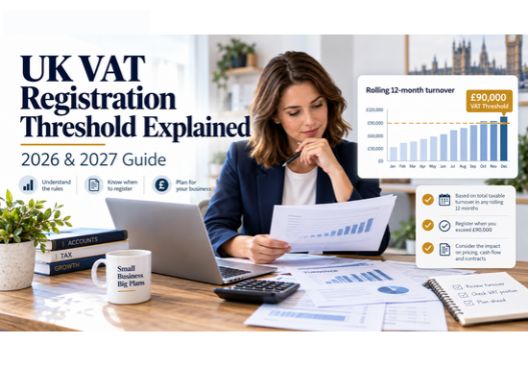
The UK VAT registration threshold is based on taxable turnover, not profit, and the figure is normally monitored over a rolling 12-month period rather than your financial year.
That distinction catches many growing businesses by surprise.
A company could still be months away from its year-end accounts but already have a legal obligation to register for VAT because its taxable sales during the previous 12 months have crossed the threshold.
For 2026, the compulsory VAT registration threshold remains £90,000. Businesses approaching this level should therefore monitor turnover carefully, understand what counts towards the threshold and prepare for VAT before registration becomes urgent.
This guide explains the UK VAT threshold for 2026, what businesses should currently know about 2027 and what to do if your turnover is getting close to £90,000.
What Is the UK VAT Registration Threshold?
The current UK VAT registration threshold is £90,000 of taxable turnover.
A UK-established business will generally need to consider compulsory VAT registration if:
-
its taxable turnover for the previous rolling 12 months goes above £90,000; or
-
it expects its taxable turnover to exceed £90,000 within the next 30 days alone.
The important word here is turnover.
VAT registration is not determined by how much profit you make after wages, rent, stock, advertising or other business costs.
A company could make only £20,000 in profit but still need to register for VAT if its taxable turnover exceeds the registration threshold.
If your business is getting close to the limit, our VAT registration services can help you review your turnover and understand when registration may become necessary.
What Counts Towards the £90,000 VAT Threshold?
The threshold is based on taxable turnover.
Broadly, this can include sales that are:
-
standard-rated for VAT;
-
reduced-rated;
-
zero-rated; and
-
certain other supplies that fall within VAT rules.
VAT-exempt activities are treated differently, which is why simply looking at total money entering the bank account may not always give you the correct VAT turnover figure.
This is where accurate bookkeeping services become particularly important.
Your accounting records should make it possible to identify taxable sales accurately and monitor the rolling total before the threshold is crossed.
Is the VAT Threshold Based on the Financial Year?
No.
This is one of the most common misunderstandings surrounding compulsory VAT registration.
The VAT threshold is generally tested using a rolling 12-month period.
That means you should not simply check turnover:
-
at your company year-end;
-
from April to March;
-
from January to December; or
-
when your accountant prepares annual accounts.
Instead, the relevant 12-month window moves forward continuously.
Example 1: A Growing Marketing Agency
Imagine a marketing agency has generated £82,000 of taxable turnover during the 12 months to the end of August.
During September, it invoices another £12,000.
At the same time, £4,000 of sales from the oldest month falls outside the new rolling 12-month period.
Its new rolling taxable turnover is approximately:
£82,000 + £12,000 − £4,000 = £90,000
The owner should review the VAT registration position immediately rather than waiting until the business's accounting year ends.
Key takeaway: VAT turnover needs to be monitored throughout the year, particularly once sales begin approaching the threshold.
[EXPERT TIP: Once rolling taxable turnover reaches around £70,000–£80,000, start reviewing it monthly. That gives you time to plan pricing, bookkeeping, software and cash flow before registration becomes compulsory.]
What Is the VAT Registration Threshold for 2026?
The compulsory VAT registration threshold for 2026 remains £90,000.
The threshold increased from £85,000 to £90,000 on 1 April 2024 and remains an important benchmark for growing UK businesses.
| VAT consideration | Position |
|---|---|
| Compulsory VAT registration threshold | £90,000 taxable turnover |
| Test | Rolling previous 12 months |
| Alternative test | Expected to exceed £90,000 within the next 30 days |
| Voluntary VAT registration | Available below the compulsory threshold |
The threshold is particularly important for businesses experiencing rapid growth.
An unexpected large contract, busy seasonal period or strong run of sales can push turnover over £90,000 much sooner than the owner expected.
Businesses should therefore build VAT monitoring into their normal financial processes rather than treating it as something to check once per year.
You can read our more detailed guide on VAT registration in the UK if you need a broader explanation of when, why and how VAT registration works.
What Is the VAT Registration Threshold for 2027?
People are already searching for the VAT registration threshold 2027, but businesses need to be careful with future tax information.
As of October 2026, the currently published VAT registration threshold is £90,000.
Businesses should not assume that the 2027/28 threshold will automatically increase, decrease or remain unchanged until the government and HMRC confirm the applicable rate.
VAT thresholds do not automatically rise every year with inflation.
For that reason, businesses preparing forecasts for 2027 should continue monitoring turnover against the existing £90,000 threshold while also checking for future government announcements.
We will update this guide when the official 2027/28 threshold is confirmed.
How Does the Rolling 12-Month VAT Test Work?
The easiest way to understand the rule is to stop thinking about a traditional accounting year.
At the end of each month, look backwards over the previous 12 months and calculate the relevant taxable turnover.
For example:
| Month reviewed | Rolling taxable turnover |
|---|---|
| June | £74,000 |
| July | £78,500 |
| August | £83,000 |
| September | £88,500 |
| October | £92,000 |
In this example, the business should not wait for December or its company year-end.
Its VAT position changes when the relevant rolling turnover crosses the compulsory threshold.
Good bookkeeping makes this significantly easier because turnover can be monitored from current records rather than reconstructed several months later.
Our guide to bookkeeping services for small businesses explains why maintaining accurate records throughout the year becomes increasingly important as a business grows.
What About the Next 30 Days VAT Test?
The rolling 12-month test is not the only trigger.
A business can also face compulsory VAT registration if it expects taxable turnover to exceed the threshold within the next 30 days alone.
Example 2: A Large New Contract
Suppose a consulting business normally generates £6,000 per month and its previous 12-month turnover remains below £90,000.
It then signs a major contract under which more than £90,000 of taxable supplies are expected during the next 30 days.
The business cannot simply say:
“My previous year's turnover was below the VAT threshold.”
The forward-looking VAT registration test may now become relevant.
This is particularly important for businesses where one large contract can dramatically change turnover.
Can You Register for VAT Before Reaching £90,000?
Yes.
Businesses do not necessarily have to wait until compulsory registration applies.
Voluntary VAT registration may be possible when turnover is below £90,000.
Whether that is beneficial depends heavily on the business.
For example, voluntary registration may be worth considering where most customers are VAT-registered businesses and the company incurs significant VAT on its own purchases.
However, VAT registration also creates additional responsibilities.
You may need to:
-
charge VAT where applicable;
-
maintain appropriate VAT records;
-
submit VAT returns;
-
operate suitable accounting software;
-
manage VAT cash flow; and
-
comply with Making Tax Digital requirements where applicable.
Therefore, voluntary registration should be treated as a commercial decision rather than automatically assuming that registration will save tax.
Will VAT Registration Hurt Business Growth?
Not necessarily.
VAT becomes challenging when businesses reach the threshold without planning for it.
The biggest pricing issue often arises in businesses selling primarily to consumers.
Suppose you currently charge a customer £120.
After VAT registration, you may need to decide whether to:
increase the customer's price, or
keep the £120 selling price and absorb the VAT within your existing margin.
That decision can materially affect profitability.
Businesses selling mainly to VAT-registered companies may experience a different commercial impact because business customers can often recover VAT themselves, subject to the normal VAT rules.
This is why VAT planning should begin before the threshold is crossed.
For online retailers, marketplaces and growing digital businesses, VAT can become even more complicated. Our guide to e-commerce accounting covers some of the additional accounting challenges faced by online businesses.
What Happens After You Cross the VAT Threshold?
Crossing the threshold does not mean your business should panic.
It means you need to act.
1. Confirm Your Taxable Turnover
Review the transactions included in the rolling 12-month calculation rather than relying on a rough sales figure.
2. Establish Your Registration Date
The timing of registration matters because delaying the application does not necessarily remove VAT that should have been accounted for.
3. Review Your Prices
Decide how VAT will affect customer pricing and margins.
This is particularly important for consumer-facing businesses.
4. Prepare Your Bookkeeping
Make sure sales, purchases, VAT amounts and supporting records can be identified accurately.
5. Choose Suitable Accounting Processes
Your systems should be capable of supporting ongoing VAT reporting.
6. Prepare for VAT Returns
Registration is only the beginning.
Once registered, businesses need an ongoing system for preparing accurate VAT returns and maintaining the supporting records.
[EXPERT TIP: Treat VAT registration as a business-planning event rather than just an HMRC form. Review pricing, margins, customer type, bookkeeping and cash flow before your first VAT return becomes due.]
Can VAT Schemes Make Registration Easier?
Some businesses may qualify for VAT schemes designed to change how VAT is calculated or paid.
Examples can include:
Cash Accounting Scheme – VAT payments can be linked more closely to when customers actually pay you rather than simply when invoices are issued.
Flat Rate Scheme – eligible smaller businesses may calculate VAT using a sector-specific flat-rate percentage, although whether the scheme is financially beneficial depends on individual circumstances.
Annual Accounting Scheme – eligible businesses may make advance VAT payments during the year with one VAT return covering the annual accounting period.
These schemes should not automatically be described as tax-saving arrangements.
The right VAT method depends on your turnover, industry, expenses, customers and cash-flow position.
Professional advice can help determine whether the standard VAT system or an alternative scheme is more appropriate.
Why Businesses Should Monitor the VAT Threshold Early
The costliest VAT problems often arise because the business notices the issue too late.
Typical warning signs include:
-
turnover rising quickly;
-
winning a large new customer;
-
seasonal sales increasing significantly;
-
launching an additional sales channel;
-
rapid e-commerce growth; or
-
expanding into a new market.
Accurate bookkeeping allows businesses to spot these changes earlier.
It also means your accountant can analyse current information rather than trying to reconstruct months of transactions after the threshold has already been exceeded.
Frequently Asked Questions
What is the UK VAT threshold in 2026?
The UK VAT registration threshold is currently £90,000 of taxable turnover. Businesses should normally monitor taxable turnover over a rolling 12-month period.
What is the VAT registration threshold for 2027?
As of October 2026, the currently published VAT registration threshold is £90,000. Businesses should check the official 2027/28 rate when it is confirmed rather than assuming that the threshold will automatically change.
Is the £90,000 VAT threshold based on profit?
No. The VAT registration threshold is based on relevant taxable turnover, not business profit.
Is the VAT threshold calculated from April to March?
Not generally. The main historical test uses taxable turnover over the previous rolling 12 months, meaning the period changes continuously throughout the year.
Can I voluntarily register for VAT below £90,000?
Yes. Businesses can potentially register voluntarily below the compulsory threshold. Whether doing so is commercially beneficial depends on the business's customers, purchases, pricing and wider VAT position.
What happens if I register for VAT late?
Late VAT registration can create liabilities for VAT that should have been accounted for from the correct effective registration date and may also expose the business to interest or penalties depending on the circumstances. If you believe your business has already crossed the threshold, deal with the issue promptly rather than waiting for the next year-end.
Don't Wait Until £90,000 to Think About VAT
The UK VAT registration threshold should not come as a surprise.
If your taxable turnover is moving towards £90,000, start monitoring your rolling 12-month position now.
That gives you time to understand how VAT could affect prices, profit margins, bookkeeping and cash flow before compulsory registration becomes urgent.
TaxVATReturn can help you review your turnover, determine whether VAT registration is required and establish the accounting processes needed for ongoing VAT compliance.
If your business is approaching the VAT threshold, explore our VAT registration services or speak with our accounting team before you cross it.
Call: 01284 332375
Email: info@taxvatreturn.co.uk
Recent Article