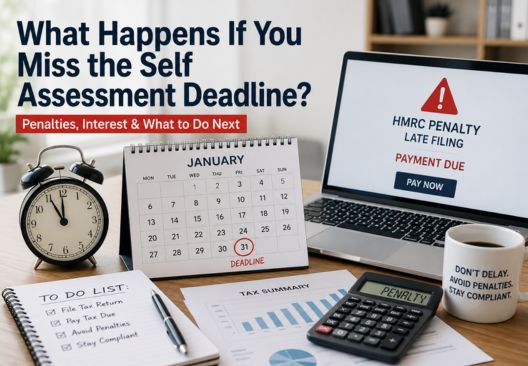
Missed the Self Assessment Deadline? Here's What to Do Next
Missing the Self Assessment deadline is something many UK taxpayers worry about, especially if they're filing for the first time or have left their tax return until the last minute. Whether you're a sole trader, freelancer, landlord, contractor, company director, or someone with additional income, it's easy to assume that missing the deadline by a day or two won't make much difference.
Unfortunately, HMRC doesn't see it that way.
Once the filing deadline passes, penalties can begin to apply even if you don't owe any tax. If tax is also unpaid, interest and additional charges may continue to build until the outstanding balance is cleared. For many taxpayers, what starts as a simple delay quickly becomes a much more expensive problem than expected.
The good news is that missing the deadline doesn't mean you've run out of options. HMRC has established processes for late submissions, payment arrangements, and appeals where there's a genuine reason for the delay. Acting quickly is often the most important step you can take to minimise penalties and prevent the situation from becoming more complicated.
At TaxVATReturn, we've helped individuals and businesses across the UK deal with late Self Assessment returns, understand HMRC notices, and get their tax affairs back on track. In this guide, we'll explain exactly what happens if you miss the Self Assessment deadline, what penalties you could face, and the practical steps you should take immediately to reduce the financial impact.
When Is the Self Assessment Deadline?
Before looking at the consequences of missing the deadline, it's important to understand which deadline applies to your return.
For most taxpayers submitting their Self Assessment tax return online, the deadline is 31 January following the end of the tax year. This is also normally the deadline for paying any Income Tax and National Insurance that is due.
If you were required to submit a paper tax return, the deadline is earlier, so it's always important to check which filing method applies to your circumstances.
Many taxpayers mistakenly focus only on paying the tax and overlook the filing deadline itself. However, HMRC treats these as two separate obligations. You can receive a late filing penalty even if you don't owe any tax, and you can also face interest and late payment charges if your tax is paid after the deadline.
Understanding this distinction helps explain why some taxpayers receive HMRC penalty notices despite believing they had nothing to pay.
What Happens If You Miss the Self Assessment Deadline?
The moment the filing deadline passes, your priority should be to submit your tax return as soon as possible.
Some people delay further because they're worried about the penalty or because they think the situation can't get any worse. Unfortunately, waiting usually increases both the financial cost and the administrative difficulty.
HMRC's penalty system is designed to encourage prompt filing. As time passes, additional penalties may be added depending on how late the return becomes.
Missing the deadline doesn't automatically mean you've done something dishonest or that HMRC will immediately open an investigation. However, it does mean your account may become subject to late filing rules, and any unpaid tax will generally begin attracting interest.
The sooner your return is submitted, the sooner those additional consequences can be limited.
Will HMRC Charge a Penalty If You File Late?
In most cases, yes.
HMRC generally applies a late filing penalty if your Self Assessment tax return is submitted after the filing deadline.
One of the biggest misconceptions is that penalties only apply if tax is owed.
That's not correct.
Even where no tax is payable, a late filing penalty may still apply because the obligation to submit the return exists separately from the obligation to pay tax.
If tax is also outstanding, additional interest and further penalties may apply depending on how long the balance remains unpaid.
This is why filing your return, even if you cannot immediately pay the tax, is often much better than doing nothing.
Many taxpayers assume they should wait until they have enough money to pay HMRC before submitting the return. In reality, filing first can often reduce the overall financial consequences.
What If You Can't Afford to Pay Your Tax?
One of the most common reasons people delay filing is because they already know they'll struggle to pay the tax owed.
While this situation can feel overwhelming, avoiding HMRC rarely improves it.
Submitting your return allows HMRC to calculate exactly how much is owed. Once the liability is known, eligible taxpayers may be able to discuss payment options rather than allowing interest and additional charges to continue building unnecessarily.
HMRC recognises that genuine financial difficulties can arise. In certain circumstances, payment arrangements may be available for taxpayers who cannot settle the full amount immediately.
The important point is that ignoring correspondence or delaying your return generally reduces the options available to you.
If you're concerned about an upcoming tax bill, seeking professional advice early can often help you understand the available solutions before the situation becomes more serious.
Can You Appeal an HMRC Late Filing Penalty?
In some situations, yes.
HMRC may consider cancelling a penalty if you have a reasonable excuse for missing the deadline.
However, simply forgetting the deadline, being too busy, or not having enough money to pay the tax will not usually be accepted as a reasonable excuse.
Each case is considered on its own facts, and HMRC will generally expect evidence supporting the circumstances that prevented you from filing on time.
Examples may include serious illness, unexpected emergencies, or other situations that genuinely made it impossible to meet the deadline.
If you believe you have a valid reason, it's important to act promptly rather than assuming the penalty cannot be challenged.
Professional advice can also help determine whether an appeal has a realistic chance of success before it is submitted to HMRC.
Why Waiting Makes the Situation Worse
When taxpayers realise they've missed the Self Assessment deadline, some decide to postpone dealing with it because they fear receiving bad news from HMRC.
Ironically, this is often what causes the biggest financial problems.
A return that's only slightly late is usually much easier to resolve than one that remains outstanding for several months.
As time passes, further penalties may become payable, interest can continue accumulating on unpaid tax, and HMRC correspondence becomes increasingly urgent.
Delaying also makes preparing the return more difficult.
Receipts become harder to find, invoices may be misplaced, financial records become less organised, and important information is easier to overlook.
Taking action immediately—even if the return isn't perfect yet—is usually the most sensible approach.
How to Avoid Missing the Self Assessment Deadline in Future
Most late filing problems are preventable with better planning throughout the tax year.
Rather than treating Self Assessment as a task that only needs attention in January, successful business owners review their finances regularly, maintain organised records, and estimate their likely tax liability well before the deadline arrives.
Keeping accurate bookkeeping throughout the year makes preparing your return significantly easier and reduces the risk of important expenses being forgotten.
Many taxpayers also benefit from setting reminders several months before the filing deadline rather than relying on memory during one of the busiest times of the year.
Working with a professional accountant provides an additional layer of reassurance because deadlines, supporting records, and HMRC requirements can all be monitored proactively rather than reactively.
For many businesses, this not only reduces stress but also improves overall tax planning throughout the year.
What Happens If You Miss the Self Assessment Payment Deadline?
Missing the filing deadline is only one part of the problem. If your Self Assessment tax remains unpaid after the payment deadline, HMRC may begin charging interest on the outstanding balance and, depending on how long the tax remains unpaid, additional late payment penalties may also apply under HMRC's rules.
Many taxpayers are surprised to discover that filing their return and paying the tax are treated as two separate obligations. You could submit your tax return on time but still face additional charges if the tax isn't paid by the deadline. Equally, you could pay the estimated amount you believe you owe but still receive a late filing penalty if the return itself wasn't submitted on time.
This distinction is important because the action you take after missing the deadline can directly affect how much the situation ultimately costs.
If you're unable to pay the full amount immediately, filing your return should still be a priority. Once HMRC knows your actual liability, it becomes much easier to understand your options and discuss a suitable payment arrangement where you meet the eligibility requirements.
Waiting until you have enough money before filing your return usually creates more problems than it solves.
Will HMRC Charge Interest on Late Tax Payments?
Yes.
If tax remains unpaid after the payment deadline, HMRC generally charges interest on the outstanding balance until it is paid. The purpose of interest is not to punish taxpayers but to compensate for late payment.
Many people incorrectly assume that once they receive a late filing penalty, nothing further happens until HMRC contacts them again.
In reality, interest can continue to accrue while the balance remains outstanding, meaning the amount you eventually pay could be higher than the original tax bill.
For this reason, it's often sensible to submit your return, understand exactly what you owe, and take action as soon as possible rather than allowing uncertainty to delay the process.
If you're unsure whether the tax calculation is correct or whether all allowable expenses have been claimed, reviewing the return before submission can sometimes reduce your overall liability legitimately.
Read our guide on How to Reduce Your Self Assessment Tax Bill Legally in the UK to understand how proper tax planning and allowable expenses may help reduce the amount of tax you owe.
What Are Payments on Account and Why Do They Surprise So Many Taxpayers?
One of the biggest shocks after submitting a Self Assessment tax return is discovering that HMRC is asking for more than the tax due for the previous year.
This usually happens because Payments on Account apply.
Instead of paying tax only for the year that has ended, eligible taxpayers may also be required to make advance payments towards the following tax year.
Many first-time filers mistake these advance payments for a penalty because the amount due appears significantly higher than expected.
In reality, Payments on Account are part of HMRC's normal tax collection process for many self-employed individuals and other taxpayers who meet the relevant criteria.
Understanding how these advance payments work helps avoid confusion and allows you to plan your cash flow more effectively throughout the year.
Can an Accountant Help If You've Already Missed the Deadline?
Absolutely.
Many people believe accountants are only useful before the filing deadline, but professional advice can be just as valuable after the deadline has passed.
An experienced Self Assessment accountant can review your financial records, prepare and submit outstanding tax returns, check whether allowable expenses or tax reliefs have been overlooked, explain HMRC correspondence, and advise whether there may be grounds to appeal a penalty if you have a genuine reasonable excuse.
Where payment difficulties exist, an accountant can also help you understand the options available and ensure your tax affairs are brought back up to date as quickly as possible.
Perhaps more importantly, professional advice can reduce the likelihood of the same situation happening again.
Many clients who originally contacted us after missing a deadline continue using our Self Assessment services because they value the reassurance of knowing their future returns will be prepared accurately and submitted on time.
How to Prevent Missing Future Self Assessment Deadlines
The easiest penalty to deal with is the one that never happens.
Good tax management isn't about rushing to complete a return every January. It's about maintaining accurate records, reviewing your income regularly, understanding your likely tax liability, and preparing well before the deadline arrives.
Keeping bookkeeping updated throughout the year makes preparing a tax return far less stressful. It also helps identify missing invoices, forgotten expenses, and possible tax-saving opportunities before it's too late to act.
Setting calendar reminders is useful, but relying solely on reminders isn't always enough if your financial records aren't organised.
Many business owners find that working with a professional accountant gives them greater confidence because deadlines, supporting documentation, and tax planning are managed throughout the year rather than during a last-minute rush.
Why Choose TaxVATReturn for Your Self Assessment Tax Return?
At TaxVATReturn, we understand that receiving a penalty notice from HMRC or realising you've missed an important deadline can feel overwhelming.
Our role isn't simply to prepare tax returns.
We help sole traders, freelancers, landlords, contractors, company directors, and individuals across the UK understand their tax obligations, organise their financial records, and submit accurate Self Assessment returns that comply with HMRC requirements.
If you've already missed the deadline, we'll review your situation carefully, prepare any outstanding returns, explain the penalties that may apply, and advise on the most practical next steps based on your individual circumstances.
If you're planning ahead for future tax years, we can also support you with bookkeeping, tax planning, VAT returns, payroll, CIS returns, and limited company accounts, helping reduce the risk of future deadlines being missed.
Our aim is to make Self Assessment straightforward, transparent, and far less stressful.
Related Services
-
CIS Return Services
-
Tax Planning Support
Final Thoughts
Missing the Self Assessment deadline doesn't automatically mean you've committed a serious offence or that your financial situation can't be recovered.
However, delaying action usually makes the problem more expensive.
Late filing penalties, interest on unpaid tax, and additional charges can all increase over time, which is why submitting your return as soon as possible is usually the best course of action.
If you're unable to pay immediately, don't assume you should wait until you've saved enough money before contacting HMRC. Understanding your tax position early gives you more options and may help prevent unnecessary costs from building up.
The best long-term strategy is to stay organised throughout the year, keep accurate financial records, and seek professional advice whenever you're unsure about your tax obligations.
At TaxVATReturn, we help individuals and businesses across the UK prepare accurate Self Assessment tax returns, understand HMRC requirements, and avoid unnecessary penalties through proactive tax planning and ongoing support.
Need help after missing the Self Assessment deadline?
Contact TaxVATReturn today. Our experienced team can help you file your outstanding return, explain HMRC penalties, review your tax position, and guide you towards the most practical solution so you can move forward with confidence.
This article is intended for general information only and should not be treated as personalised tax advice. Tax rules, penalties, and interest charges may change, and the right approach depends on your individual circumstances. If you're unsure about your position, consider seeking professional advice.
Recent Article