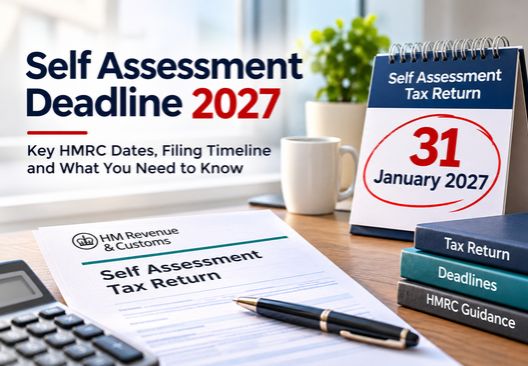
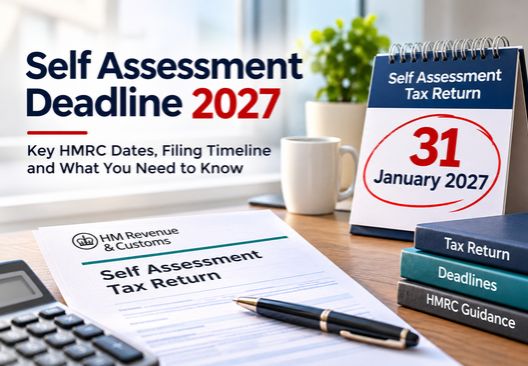
Self Assessment Deadline 2027: 31 January Guide
31 January 2027 is the key Self Assessment deadline for millions of UK taxpayers — but it is surprisingly easy to confuse which tax year the deadline actually relates to.
The 31 January 2027 online filing deadline applies to the 2025/26 tax year, covering income earned between 6 April 2025 and 5 April 2026.
If you are asking about income earned during the 2026/27 tax year, the normal online filing deadline is later: 31 January 2028.
Understanding that distinction can prevent late returns, unnecessary penalties, and last-minute confusion.
This guide explains the main Self Assessment deadlines for 2027, when you must submit the 2025/26 return, when you must pay tax, what happens if you miss the deadline, and why filing earlier can make managing your tax considerably easier.
What Is the Self Assessment Deadline for 2027?
For most taxpayers submitting their return online, the main Self Assessment deadline in 2027 is 31 January 2027.
HMRC must normally receive your online tax return for the 2025/26 tax year by 11:59pm on 31 January 2027.
Any Self Assessment tax due by that date must also normally be paid by 11:59pm on 31 January 2027.
HMRC has said around 12 million people are expected to submit a return by the January deadline.
Key Self Assessment Dates for 2025/26
| Requirement | Deadline |
|---|---|
| 2025/26 tax year ended | 5 April 2026 |
| Register for Self Assessment where required | 5 October 2026 |
| Paper tax return deadline | 31 October 2026 |
| Online tax return deadline | 31 January 2027 |
| Self Assessment tax payment deadline | 31 January 2027 |
| Second payment on account, where applicable | 31 July 2027 |
If you intended to file a paper return, the normal 31 October 2026 paper deadline has already passed.
For most taxpayers who have not yet filed, the focus should therefore be on completing the return online before 31 January 2027.
When Do I Submit My Tax Return for 2025/26?
The 2025/26 tax year ran from:
6 April 2025 to 5 April 2026
You can submit the return after that tax year has ended. You do not have to wait until January 2027.
In fact, filing earlier can be beneficial because it gives you more time to understand what you owe and plan for the payment.
HMRC is actively encouraging taxpayers to start early rather than waiting for the January rush.
Example 1: A Sole Trader Filing Early
Imagine a self-employed consultant completes their bookkeeping and accounts in November 2026.
They know their figures for the 2025/26 tax year and have all the information needed for the return.
There is no advantage in waiting until 30 or 31 January.
Submitting the return in November allows you to:
-
check the tax calculation earlier;
-
know how much needs to be paid;
-
investigate any unexpected figures;
-
correct missing records;
-
budget for the January payment.
Filing your tax return early does not normally mean that your 31 January tax payment suddenly becomes due immediately.
This is particularly useful for sole traders whose income varies considerably from year to year.
Regular bookkeeping services can make this process much easier because your income and expenses are already organised rather than reconstructed at the last minute.
[EXPERT TIP: Treat 31 January as the final safety date, not your target filing date. If your records are ready in November or December, submitting early gives you significantly more time to deal with an unexpected tax bill.]
When Is Self Assessment Due for 2026/27?
This is where many taxpayers get confused.
The 2026/27 tax year runs from:
6 April 2026 to 5 April 2027
You cannot complete the final tax return for that year until the tax year has ended.
The normal online Self Assessment deadline for the 2026/27 return is 31 January 2028.
So:
31 January 2027 → 2025/26 tax return
31 January 2028 → 2026/27 tax return
Example 2: A Landlord Confusing the Tax Years
Suppose a landlord receives rental income throughout November 2026.
That income falls within the 2026/27 tax year.
It does not need to be included in the return due on 31 January 2027.
The January 2027 return relates to income and gains from the tax year that ended on 5 April 2026.
Key takeaway: Always identify the tax year first, then identify the filing deadline.
Who Needs to Complete a Self Assessment Tax Return?
Self Assessment is commonly associated with sole traders, but several other circumstances can create a requirement to file.
Depending on individual circumstances, Self Assessment may apply to:
-
self-employed individuals;
-
landlords receiving rental income;
-
company directors with reportable income;
-
people receiving certain untaxed income;
-
individuals with Capital Gains Tax reporting requirements;
-
people receiving income from overseas;
-
partners in business partnerships;
-
individuals whose circumstances otherwise require a return.
If you are uncertain whether you need to file a return, it is better to confirm this before the deadline than assume PAYE has covered everything.
TaxVATReturn's Self Assessment tax return services can help individuals review their position and prepare the required return.
What Information Do You Need Before Filing?
The exact information depends on your circumstances, but a Self Assessment return may involve:
Employment income
P60, P45 and relevant employment benefits.
Self-employment income
Business sales, allowable expenses and accounting records.
Property income
Rental income and relevant allowable property expenses.
Savings and investment income
Interest, dividends and other investment information.
Capital gains
Details of relevant asset disposals where reporting is required.
Pension contributions and reliefs
Information needed to claim applicable tax relief.
Rushing to find this information on 30 January increases the chance of mistakes.
Good bookkeeping and document management throughout the year can significantly reduce the pressure.
When Does the Self Assessment Tax Have to Be Paid?
For the 2025/26 Self Assessment return, tax due by the normal January deadline generally needs to reach HMRC by:
11:59 pm on 31 January 2027.
This is separate from the filing obligation.
Submitting your return does not mean the tax has automatically been paid.
HMRC specifically warns that taxpayers can face penalties for both late filing and late payment.
What Are Payments on Account?
Some taxpayers also make payments on account towards the following year's tax bill.
Where payments on account apply, they are normally made in two instalments:
31 January
and
31 July
This can make the January bill look larger than expected because it may include both:
-
a balancing payment for the previous tax year; and
-
the first payment on account towards the following year.
That is another reason to calculate your tax position early.
What Happens If You Miss the Self Assessment Deadline?
Missing the deadline can become expensive.
HMRC's current late filing penalty structure includes:
-
an initial £100 late filing penalty;
-
after three months, daily penalties of £10 per day, up to £900;
-
additional penalties after six months;
-
further penalties after twelve months.
Late payment can also trigger separate penalties and interest.
Importantly, the initial £100 late filing penalty can apply even if you have little or no tax to pay.
What Should You Do If You Know You Will Be Late?
Do not ignore the return.
The longer it remains outstanding, the greater the potential penalty exposure.
Instead:
-
complete the missing accounting records;
-
identify any information you are waiting for;
-
submit the return as soon as reasonably possible;
-
pay what you can by the deadline;
-
contact HMRC where appropriate.
If your situation involves an HMRC enquiry or more complicated tax correspondence, professional HMRC investigation support may also be appropriate.
[EXPERT TIP: Filing and paying are separate obligations. Even if you cannot pay the entire tax bill immediately, that is not a good reason to leave the tax return unfiled.]
What If You Registered for Self Assessment Late?
The normal registration date for someone who needs to notify HMRC for 2025/26 was 5 October 2026.
If you register after that date, HMRC may give you a different filing deadline — generally three months from the date of its letter or email.
However, HMRC states that tax owed can still be due by 31 January 2027, even where the filing deadline is later.
So late registration should not be treated as automatically extending the tax payment deadline.
Why Filing Your Tax Return Early Can Help
Many people associate Self Assessment with January because that is when the online deadline occurs.
But waiting until January can create unnecessary pressure.
Filing earlier gives you more time to:
Understand Your Tax Bill
You know what you owe before the payment deadline arrives.
Budget Properly
If the bill is larger than expected, you have more time to manage cash flow.
Correct Missing Information
A missing invoice or incorrect bookkeeping entry is easier to resolve when you have weeks rather than hours.
Receive a Refund Earlier
If you have overpaid tax, filing earlier may mean receiving a refund sooner.
Avoid Website and Adviser Pressure
January is one of the busiest periods for accountants and Self Assessment taxpayers.
HMRC itself has encouraged taxpayers to avoid leaving their return until the last minute.
Self Assessment Deadline 2027 FAQs
What is the Self Assessment deadline in 2027?
For most taxpayers filing online, the deadline for the 2025/26 Self Assessment tax return is 31 January 2027 at 11:59pm.
When do I submit my 2025/26 tax return?
The 2025/26 tax year ended on 5 April 2026. You can submit the return after the end of the tax year, with the normal online deadline being 31 January 2027.
When is the 2026/27 Self Assessment return due?
The 2026/27 tax year ends on 5 April 2027. The normal online filing deadline is 31 January 2028.
What happens if I miss the 31 January deadline?
An initial £100 late filing penalty can apply, with additional penalties possible if the return remains outstanding. Separate late-payment penalties and interest may also apply.
Can I submit my Self Assessment before January?
Yes. Once the relevant tax year has ended and you have the necessary information, you can file before January. Filing early can give you more time to budget and correct any issues.
Do Not Let 31 January Become a Last-Minute Problem
The most important date for taxpayers completing their 2025/26 Self Assessment return is 31 January 2027.
But waiting until January to begin preparing the return can create unnecessary pressure.
Start by making sure your bookkeeping is complete, your income records are available, and you understand which tax year you are reporting.
If you are filing for 2025/26, the deadline is 31 January 2027.
If you are asking about the 2026/27 tax year, the normal online deadline is 31 January 2028.
TaxVATReturn provides professional Self Assessment tax return support for sole traders, landlords, company directors and individuals who want help preparing an accurate return and understanding their tax position.
If your 2025/26 return is still outstanding, deal with it before the January rush.
Recent Article